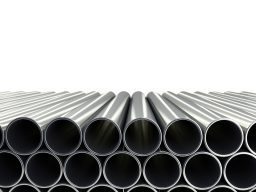
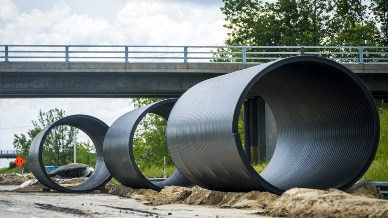
Carbon Steel for Pipe & Tubes
It’s a steel made out of iron and carbon with varying carbon percentage that determines its grade. Low carbon steel is harder but also makes them more brittle and when the carbon percentage increases, it turns stronger and harder while also turning more difficult to weld and manipulate with heat.
The constitution of other alloying elements like chromium, manganese, cobalt, tungsten is not defined. Owning to its low melting point it has a better heat distribution. It has a matte, dull finish.
Medium carbon is easy to cut and formed by machines and they can be used to form rails, pipe lines and more.
Applications: Rails, Pipe Lines
Galvanized (GI) steel for Pipe & Tubes
Made by immersing the carbon steel in the molten zinc, where the later diffuses into the top layers forming the protective layer that’s corrosive resistant. It’s affordable and cheap compared to stainless steel which is more stronger and sustainable and more attractive compared to Galvanized steel. It’s primarily used in the low cost infrastructure projects and much cheaper method of rust-proofing the steel compared to stainless steel, hands down.
Applications: Low cost infrastructure projects, steam, water, gas, or air lines.
Stainless Steel for Pipes & Tubes
Stainless steel is usually defined by the additional presence of chromium, the more dominating of the rest of the alloy combinations. It forms a thin layer of Chromic oxide outside the steel, making it glossier and also corrosion resistant. Stainless steel are usually more sustainable and long lasting compared to Galvanized steels and also very expensive. It’s rust resistant and less brittle compared to carbon steel
Stainless steel tubes are used for water solutions where purity is high priority and structural solutions for automobile and infrastructure projects. Stainless steel pipes for high performance industries such as aerospace and engineering.
Applications: Aerospace, Automobile, Infrastructure projects to name a few.
About Madras Steels:
From the humble beginnings back in the year 1988, Madras Steels & Tubes has reinvented the idea of traditional Pipe & Tube suppliers in India delivering standard and customized piping and tubing solutions in Galvanized steel, mild steel, stainless steel, Seamless, ERW/SAW, Boiler Tubes, CRCA Round tubes etc.,
We are a leading exporter/ importer/ authorized supplier for steel tube and pipes with branches in cities like Chennai, Mumbai, Bangalore, Kochi, Hyderabad, Visakhapatnam, Ahmedabad, and Delhi.
[/vc_column_text][/vc_column][/vc_row][vc_row][vc_column][vc_column_text woodmart_inline=”no” text_larger=”no”]FAQs – Types of Steel Used in Pipes & Tubes
1. What are the main types of steel used in pipes and tubes?
The most common types include carbon steel, galvanized (GI) steel, and stainless steel, each suited for different industrial applications.
2. What is carbon steel and where is it used in pipes?
Carbon steel is made from iron and carbon, offering strength and durability. It is widely used in pipelines, railways, and general engineering applications.
3. How does carbon content affect steel properties?
Higher carbon content increases strength and hardness but reduces weldability and flexibility, making the steel more brittle.
4. What are the advantages of galvanized steel pipes?
Galvanized steel pipes offer corrosion resistance due to zinc coating, making them suitable for water supply, gas lines, and low-cost infrastructure projects.
5. How are GI pipes different from carbon steel pipes?
GI pipes are carbon steel pipes coated with zinc for rust protection, whereas carbon steel pipes do not have this protective coating.
6. What makes stainless steel pipes unique?
Stainless steel contains chromium, which forms a protective oxide layer, providing excellent corrosion resistance, durability, and a polished finish.
7. Where are stainless steel pipes commonly used?
They are used in aerospace, automotive, infrastructure, chemical processing, and applications requiring hygiene and corrosion resistance.
8. Which type of steel pipe is best for corrosion resistance?
Stainless steel offers the highest corrosion resistance, followed by galvanized steel, while carbon steel is more prone to rust without coating.
9. Are stainless steel pipes more expensive than GI and carbon steel pipes?
Yes, stainless steel pipes are more expensive due to superior durability, corrosion resistance, and long service life.
10. How do I choose the right steel type for my application?
Selection depends on factors like application, environment, corrosion exposure, budget, and required strength and durability. [/vc_column_text][/vc_column][/vc_row]