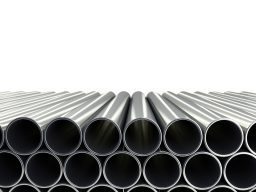
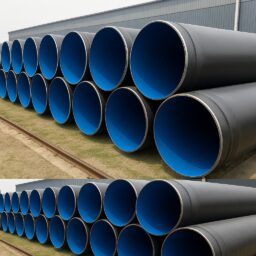
In India’s fast-evolving industrial and infrastructure landscape, durability and corrosion resistance are vital to long-term performance. Among protective technologies, epoxy coating has become a game-changer — delivering unmatched protection, longer service life, and improved flow efficiency across sectors like construction, oil & gas, water, and utilities.
Why Epoxy Coating Matters
Epoxy coatings form a tough, adhesive barrier on steel surfaces, protecting them from rust, moisture, chemical attack, and abrasion. This results in reduced maintenance costs, extended lifespan, and superior reliability — especially in harsh or high-moisture environments.
Two Types of Epoxy Coating
1. Powder Epoxy Coating
Powder epoxy coating involves applying dry epoxy powder electrostatically and curing it under heat.
Key Benefits:
-
- Provides a uniform, durable finish with excellent adhesion.
- Ideal for external surfaces exposed to soil, water, or mechanical impact.
- Highly resistant to UV rays and corrosion, making it suitable for buried and submerged applications.
2. Liquid Epoxy Coating
Liquid epoxy is a two-component system (resin + hardener) applied by spraying, brushing, or dipping.
Key Benefits:
-
- Excellent for internal linings, especially where smooth flow and chemical resistance are critical.
- Can be customized for specific temperature, humidity, and pressure conditions.
- Provides flexibility and ease of application on irregular or large-diameter pipes.
Both coating types enhance the performance, longevity, and sustainability of steel pipes — ensuring strong resistance to wear, corrosion, and fluid contamination.
Steel Pipes Suitable for Epoxy Coating
| Pipe Type | Applicability & Purpose |
| MS (Mild Steel) Pipes | Commonly coated; prevents rust, moisture, and chemical damage in construction and infrastructure. |
| GI (Galvanized Iron) Pipes | Adds extra corrosion resistance beyond zinc coating — ideal for marine or industrial settings. |
| Seamless Steel Pipes | Used in oil, gas, and hydraulic systems — epoxy coating enhances internal flow and corrosion protection. |
| Stainless Steel Pipes | Optional coating for added insulation and chemical resistance in harsh atmospheres. |
| Carbon Steel Pipes | Excellent for buried or submerged applications — prevents external corrosion. |
| LHS / RHS Sections | Used in architectural frameworks — coating improves UV and weather resistance. |
| Large Diameter Pipes | Essential for water transmission and drainage — coating prevents soil-side corrosion and abrasion. |
Why Industries Choose Epoxy-Coated Steel Pipes
-
- Superior Corrosion Protection
- Enhanced Flow Efficiency
- Reduced Maintenance Costs
- Extended Pipe Lifespan
- Custom Coating Options (Powder & Liquid)
- Eco-friendly & Sustainable
- Superior Corrosion Protection
Madras Steels & Tubes: Delivering Performance with Protection
At Madras Steels & Tubes, we deliver custom epoxy-coated steel pipes engineered for durability, precision, and performance. Our coatings are applied using advanced methods, ensuring consistent film thickness and strong adhesion.
With operational branches in Chennai, Bangalore, Mumbai, Delhi, and Kolkata, we cater to diverse industrial requirements — from construction and infrastructure to utilities and process industries.
🔗 Visit us at: www.madrassteels.in
[/vc_column_text][/vc_column][/vc_row][vc_row][vc_column][vc_column_text css=”” woodmart_inline=”no” text_larger=”no”]
FAQs – Epoxy-Coated Steel Pipes in India
1. What are epoxy-coated steel pipes?
Epoxy-coated steel pipes are pipes coated with a protective epoxy layer that prevents corrosion, chemical damage, and moisture penetration, enhancing durability and performance.
2. Why is epoxy coating important for steel pipes?
Epoxy coating provides a strong barrier against rust, chemicals, and environmental exposure, reducing maintenance costs and extending the service life of steel pipes.
3. What are the types of epoxy coatings used for steel pipes?
The two main types are powder epoxy coating for external protection and liquid epoxy coating for internal linings and specialized applications.
4. What are the benefits of powder epoxy coating?
Powder epoxy coating offers excellent adhesion, uniform thickness, UV resistance, and durability, making it suitable for buried and exposed pipelines.
5. Where is liquid epoxy coating used in steel pipes?
Liquid epoxy coating is used for internal pipe linings where smooth flow, chemical resistance, and customized application conditions are required.
6. Which types of steel pipes can be epoxy coated?
MS pipes, GI pipes, seamless pipes, stainless steel pipes, carbon steel pipes, hollow sections, and large-diameter pipes can all be epoxy coated.
7. What industries use epoxy-coated steel pipes in India?
They are widely used in construction, oil & gas, water supply, infrastructure, utilities, and industrial process applications.
8. How does epoxy coating improve pipe performance?
It enhances corrosion resistance, improves flow efficiency, reduces friction losses, and increases the overall lifespan of the pipes.
9. Are epoxy-coated pipes environmentally friendly?
Yes, epoxy coatings are considered eco-friendly as they reduce corrosion-related failures, minimize maintenance, and improve long-term sustainability.
10. Why choose epoxy-coated pipes for industrial applications?
They offer superior protection, durability, customizable coatings, and reliable performance in harsh and corrosive environments.
[/vc_column_text][/vc_column][/vc_row]